Right of Way Rules Every Driver Gets Wrong
.png)
Author : Elias Riadi Published : December 8, 2025
Right-of-Way Rules Every Driver Gets Wrong (Updated for 2026)
Right-of-Way Rules Every Driver Gets Wrong (Updated for 2026)
Right of way does not mean “I get to go no matter what.” It means the law tells drivers who should yield in a given situation. At intersections, the first to stop goes first, vehicles on the right go next, pedestrians usually go first in crosswalks, and left turns must yield to oncoming traffic and people walking.
Right-of-way mistakes cause thousands of crashes every year. Many drivers were taught the basics years ago but forget the details—or never fully understood them in the first place. This guide explains the most common right-of-way rules that drivers get wrong and how to handle them safely in everyday driving.
Table of Contents
- 1. What Does “Right of Way” Really Mean?
- 2. The Golden Rules of Right of Way
- 3. 4-Way Stops and Stop-Sign Intersections
- 4. Uncontrolled Intersections (No Stop Signs or Signals)
- 5. Pedestrians and Crosswalks
- 6. Left Turns vs. Oncoming Traffic
- 7. Merging, Lane Changes, and Freeway On-Ramps
- 8. Emergency Vehicles and Funeral Processions
- 9. Common Right-of-Way Mistakes Drivers Make
- 10. Frequently Asked Questions
1. What Does “Right of Way” Really Mean?
Right of way is a legal term that explains who must yield in a particular driving situation. It does not give anyone a license to drive aggressively or ignore other road users. Even when you technically have the right of way, you are still required to avoid a collision if possible.
The key idea: Right of way is something you yield, not something you take.
2. The Golden Rules of Right of Way
Most right-of-way problems can be solved by remembering these basic principles:
- When in doubt, yield and make eye contact with other road users.
- Never force another driver or pedestrian to brake or swerve to avoid you.
- Even if you are correct legally, it is better to avoid a crash than to “win.”
- Pedestrians and vulnerable road users (bicycles, scooters) deserve extra caution.
3. 4-Way Stops and Stop-Sign Intersections
4-way stops are one of the most common places drivers get confused.
Basic 4-Way Stop Rules
- First to stop, first to go. The vehicle that stops first has the right of way.
- If two vehicles stop at the same time, the driver on the right goes first.
- When facing each other, a driver going straight generally has priority over a driver turning left.
- Everyone must make a complete stop—no rolling stops.
At 2-way stops (where cross traffic does not stop), the stopping vehicles must yield to traffic on the through road and to pedestrians.
4. Uncontrolled Intersections (No Stop Signs or Signals)
At intersections with no signs or signals, drivers should:
- Slow down and be prepared to yield.
- Yield to vehicles already in the intersection.
- Yield to the vehicle on the right when two vehicles arrive at the same time.
- Use eye contact and signals to communicate with other drivers.
These locations can be especially dangerous in residential areas where speeds are low but visibility is limited.
5. Pedestrians and Crosswalks
Pedestrian right-of-way laws are some of the most misunderstood—but also some of the most important.
- Drivers must stop for pedestrians in a marked crosswalk.
- In many states, drivers must also yield to pedestrians in an unmarked crosswalk at an intersection.
- Never pass a vehicle stopped at a crosswalk—there may be a pedestrian crossing in front of them.
- Turning drivers must yield to pedestrians who are crossing the street they are turning onto.
The safe habit: If someone is walking across the street where you intend to go, let them finish crossing before you move.
6. Left Turns vs. Oncoming Traffic
Left turns are another major source of crashes.
- A driver making a left turn must yield to oncoming traffic going straight or turning right.
- Even with a green light, there is usually no right of way for left turns unless there is a protected green arrow.
- Left-turning drivers must also yield to pedestrians crossing the street they are turning into.
The safe rule: If there is any doubt about whether you can complete the turn safely, wait.
7. Merging, Lane Changes, and Freeway On-Ramps
When lanes merge or when a vehicle is entering a freeway, right of way is often misunderstood.
- Vehicles changing lanes or merging must yield to traffic already in that lane.
- Cars entering a freeway from an on-ramp must adjust their speed and yield to traffic already on the freeway.
- Use your turn signal, check mirrors, and check blind spots before merging.
Even if another driver is not being courteous, it is safer to back off and create space than to insist on your position.
8. Emergency Vehicles and Funeral Processions
When emergency vehicles or funeral processions are present, normal rules change.
- When an emergency vehicle with lights and sirens approaches, drivers must pull to the right and stop when safe.
- Do not block intersections; clear them if you are already inside.
- Funeral processions may have special right-of-way privileges in some states; do not cut through or try to join them.
Always give emergency workers and processions extra time and space.
9. Common Right-of-Way Mistakes Drivers Make
- Assuming “I’m bigger” or “I’m faster” means I get to go first.
- Waving other drivers through when you actually have the right of way, causing confusion.
- Rolling through stop signs and assuming others will yield.
- Not looking for pedestrians or cyclists before turning.
- Speeding up to “beat” an oncoming vehicle during a left turn.
The safest mindset is: Be predictable, be patient, and be willing to yield. Crashes and tickets are far more expensive than waiting a few extra seconds.
10. Frequently Asked Questions
Does having the right of way mean I can go even if others won’t yield?
No. The law expects you to use reasonable care. If another driver is not yielding, you must still avoid a collision if possible.
Who goes first at a 4-way stop?
The vehicle that stops first goes first. If two vehicles stop at the same time, the one on the right goes first.
Do pedestrians always have the right of way?
Pedestrians in crosswalks generally have the right of way, but they must also act safely. Drivers, however, have a greater responsibility to avoid hitting them.
What if I’m not sure who has the right of way?
When in doubt, yield. Make eye contact, use signals, and proceed only when it is clearly safe.
Recent Posts
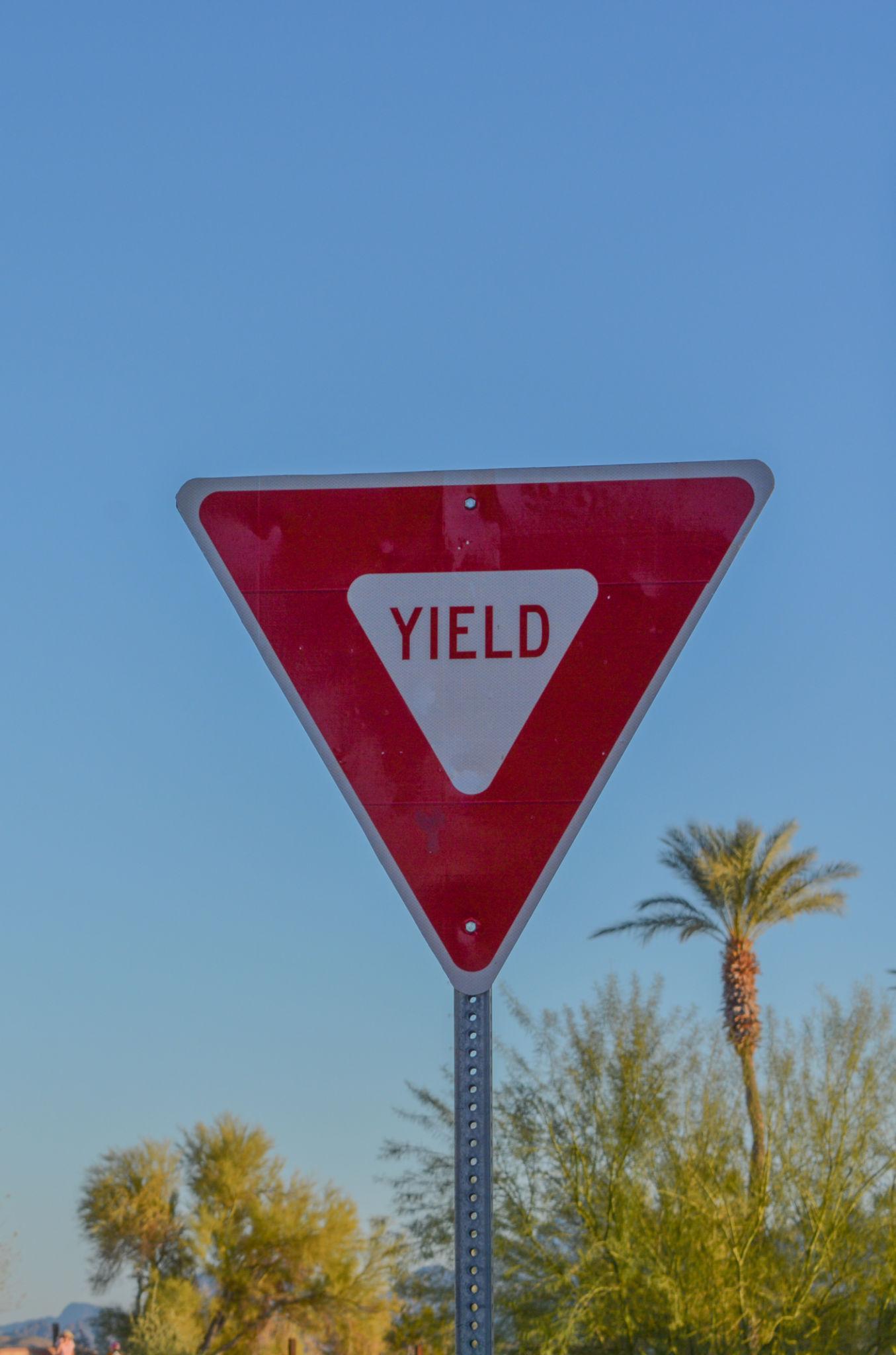
Traffic Rules and Right of Way | Complete Driver Guide
24 February 2026

Best Online Traffic Schools in California | DMV Approved & Court Accepted
24 February 2026
Affordable Online Traffic Schools in California
24 February 2026
Speed Camera and Red Light Ticket Issues
17 February 2026
Parking and Traffic Ticket Payments
17 February 2026
What Happens If You Don’t Complete Traffic School in California?
02 February 2026

How to Check Tire Pressure: Step-by-Step Guide for Safe Driving
30 December 2025

How to Jump Start a Car: Step-by-Step Safe Guide
26 December 2025
Car Maintenance
26 December 2025
How to Get a Driver’s License in Florida Over 18 (Step-by-Step Guide)
22 December 2025
Pennant Shaped Sign
22 December 2025
Revoked License Meaning: What It Is, Why It Happens, and How to Get It Back
14 December 2025

How Much Does AZ Traffic School Cost? Arizona Defensive Driving Explained
14 December 2025
TDLR Approved Driving Safety Course – Complete Guide
14 December 2025
How to Get a Driver’s License in Florida Over 18 (Complete Guide)
14 December 2025
Yellow Traffic Light Laws: What Drivers Must Do and Common Myths Explained
14 December 2025

California Driver’s License Test Requirements 2026 Guide
14 December 2025
Expired Driver’s License Renewal Requirements in Florida (2026 Guide)
14 December 2025
What Happens If You Dont Pay a Traffic Ticket 2026 Guide
08 December 2025
How Long Do Points Stay On Your License - Updated for 2026
08 December 2025

What Happens If You Don’t Pay a Traffic Ticket? (2026 Guide)
08 December 2025
How Many Points Is a Stop Sign Ticket? State-by-State Guide
08 December 2025

4-Way Stop Rules Every Driver Gets Wrong
08 December 2025
California Traffic School Requirements (2026 Update)
08 December 2025

How To Dismiss a Speeding Ticket Without Going to Court (2026 Guide)
08 December 2025
Defensive Driving Course vs. Traffic School — What’s the Difference?
08 December 2025